
Buying a flash point tester is not the same as buying a generic lab instrument. The flash point result can decide whether a fuel batch ships, whether a solvent is safe to store, or whether your laboratory passes an audit. That is why the choice of flash point tester manufacturers and suppliers matters as much as the choice of instrument model.
This guide is written for procurement managers, laboratory managers, distributors, and importers who need to source flash point testers from reliable manufacturers, suppliers, factories, wholesalers, or distributors. We explain the market landscape, the standards you must verify, the questions to ask before you order, and how to build a shortlist of flash point tester manufacturers that will not fail you on compliance, delivery, or after-sales support.
What Is a Flash Point Tester?
A flash point tester measures the lowest temperature at which a liquid gives off enough vapour to ignite when an ignition source is applied. It is one of the most important safety and quality instruments in the petroleum, chemical, paint, and food industries. Flash point data is used to classify flammable liquids, set storage and transport conditions, and verify that finished products meet specification.
There are two broad families of flash point testers: closed cup instruments, which trap vapour in a sealed cup and produce lower (more conservative) flash point values, and open cup instruments, which expose the sample surface to the air. Each family is tied to specific test methods defined by ASTM, ISO, IP, and other standards.
Flash Point Tester Market Overview: Who Makes These Instruments?
The global flash point tester market is served by four types of players:
- Established Western brands — long-history instrument companies (primarily in the USA, Germany, Austria, and the UK) known for premium pricing, strong brand recognition, and full compliance documentation.
- Chinese manufacturers — a growing group of factories concentrated in Guangdong, Shanghai, and Beijing that combine ASTM-compliant engineering with significantly lower pricing and OEM/ODM flexibility.
- Distributors and trading companies — companies that resell instruments from multiple brands without manufacturing them. They add local language support and logistics but cannot control product quality or customization.
- Marketplace aggregators and directory platforms — Alibaba, Made-in-China, DirectIndustry, and similar platforms that connect buyers with factories. Useful for discovery, but quality varies widely and compliance must be verified case by case.
For procurement teams, the practical question is not “which brand is best” but “which flash point tester supplier can deliver the right method, the right quality, and the right total cost for my application.” A distributor selling a famous brand may cost two to three times more than a direct factory purchase of an instrument that passes the same ASTM verification.
Flash Point Testing Standards: The First Thing to Verify
Before you compare prices or lead times, confirm which test method your product or regulation requires. The instrument must be designed and verified against the exact standard, because flash point results are not interchangeable between methods.
| Standard | Method Type | Typical Applications | Flash Point Range |
|---|---|---|---|
| ASTM D93 (Pensky-Martens) | Closed cup | Fuel oils, lubricants, biodiesel, solvents, waste oils | 0 to 370 °C |
| ASTM D92 (Cleveland) | Open cup | Petroleum products with flash point above 79 °C, bitumen, heavy oils | Up to 400 °C |
| ASTM D3278 (Setaflash / rapid) | Small-scale closed cup | Paints, coatings, adhesives, solvents, rapid QC screening | -30 to 300 °C |
| ISO 2719 | Closed cup (equivalent to D93) | International fuel and lubricant specifications | 0 to 370 °C |
| ISO 2592 | Open cup (equivalent to D92) | International petroleum specifications | Up to 400 °C |
Reference the official standards for full requirements: ASTM D93 (Pensky-Martens closed cup), ASTM D92 (Cleveland open cup), and the general ASTM standards catalogue.
When a manufacturer claims compliance with ASTM D93, ask for the verification certificate and check the instrument’s heating rate, stirrer speed, and ignition mechanism against the standard’s requirements. A compliant flash point tester is engineered around the standard — not merely labeled with it.
Types of Flash Point Tester Manufacturers and Suppliers
Understanding the supply chain helps you choose the right sourcing channel. Here is how the main supplier types compare.
| Supplier Type | Strengths | Limitations | Best For |
|---|---|---|---|
| Direct manufacturer (factory) | Lowest unit cost, OEM/ODM available, direct quality control, customization | Requires more technical due diligence, longer communication loops | Volume buyers, distributors, labs with specific requirements |
| Brand manufacturer (direct) | Proven track record, full documentation, global service network | Premium price, limited customization, long lead times | Buyers with large budgets and strict brand policies |
| Distributor / dealer | Local support, consolidated procurement, fast samples | Higher margin on top, no manufacturing control, stock-dependent | Single-unit buyers, urgent needs, local-language support |
| Marketplace platform | Wide selection, easy comparison, escrow protection | Mixed quality, compliance unclear, hard to audit factories | Initial discovery and small orders |
For repeat purchases, service contracts, or private-label programs, dealing directly with a flash point tester manufacturer that has its own factory is almost always the most cost-effective and controllable route.
8 Key Factors to Evaluate When Choosing a Flash Point Tester Manufacturer
1. Standards Compliance and Verification
Confirm the exact ASTM/ISO methods the instrument supports (D93, D92, D3278, ISO 2719, ISO 2592) and request the test reports or verification certificates. For regulated industries, ask whether the instrument has been verified by an independent laboratory.
2. Manufacturing Capability and Quality Control
Visit or audit the factory if possible. Ask about CNC machining capability, calibration equipment, temperature sensor sourcing, and the QC process for each unit before shipment. A manufacturer that tests every instrument against a reference standard is a manufacturer you can trust.
3. Certifications and Export Experience
Check CE, ISO 9001, and any market-specific certifications required in your country. Ask for the list of countries the manufacturer exports to — export experience to regulated markets (EU, USA, Middle East) is a strong signal of documentation quality.
4. OEM and ODM Capability
If you plan to sell under your own brand, verify that the manufacturer supports OEM (your logo, your colour, your packaging) and ODM (your specifications, custom software, custom accessories). Not every factory will do small-volume private label work.
5. Minimum Order Quantity and Lead Time
Clarify MOQ per model, lead time for standard units, and lead time for customized units. A reliable supplier gives you written delivery commitments and keeps you updated on production status.
6. After-Sales Support and Calibration
Flash point testers need periodic calibration, spare parts, and sometimes firmware updates. Ask about warranty duration, response time, availability of spare parts, and whether remote troubleshooting is offered. After-sales support is where cheap suppliers reveal their true cost.
7. Total Cost of Ownership
Compare not just the purchase price but the total cost: shipping, customs, installation, calibration certificates, consumables, spare parts, training, and warranty coverage. A seemingly cheap instrument that fails calibration after six months is not cheap at all.
8. Communication and Technical Competence
Send the supplier a technical question about your application before you order. The quality of the answer tells you more about the company than any brochure. A manufacturer that understands ASTM D93 versus D92 and can recommend the right configuration for your product is a partner, not just a seller.
Manufacturing Regions Compared: China, Europe, and the USA
Flash point tester manufacturers are concentrated in a few regions. Each has a different value proposition.
| Region | Typical Price Level | Compliance Quality | Customization | Lead Time |
|---|---|---|---|---|
| China (Guangdong / Shanghai) | Low to medium (often 40–60% below Western brands) | ASTM-compliant; verify certificates per model | Excellent OEM/ODM flexibility | 2–6 weeks standard |
| Europe (Germany / Austria / UK) | High | Very high, full documentation | Limited, mostly standard models | 6–12 weeks |
| USA | High | Very high, strong brand heritage | Limited | 6–12 weeks |
For buyers who need ASTM-compliant instruments at competitive pricing with customization options, Chinese manufacturers have become the default sourcing destination. The key is choosing a factory that treats compliance and after-sales as seriously as a Western brand.
How to Verify a Flash Point Tester Manufacturer Before Ordering
Use this checklist before placing any order with a new flash point tester supplier:
- Request the instrument’s datasheet and confirm the exact standard (D93 / D92 / D3278 / ISO 2719 / ISO 2592) and temperature range.
- Ask for verification test reports or third-party calibration certificates.
- Check the factory’s export record, business registration, and years in the instrument business.
- Request a video demonstration or a live remote test of the instrument.
- Ask for references from buyers in your industry or region.
- Confirm warranty terms, spare parts availability, and calibration support in writing.
- For large orders, consider a pre-shipment inspection by a third-party agency.
Sourcing Flash Point Testers Wholesale: Tips for Distributors and Importers
If you are a distributor, importer, or trading company adding flash point testers to your portfolio, work with a manufacturer that understands the wholesale model:
- Ask for exclusive territory or model protection to avoid channel conflict.
- Negotiate tiered pricing for MOQs and annual volume commitments.
- Request spare parts kits with each container so you can service units locally.
- Insist on English (or your local language) documentation: manuals, certificates, and software.
- Plan for calibration support — either a local partner or a calibration agreement with the factory.
Wholesale buyers should also compare flash point tester manufacturers and suppliers side by side on a small pilot order before committing to a long-term contract. A pilot order of one or two units will reveal communication quality, packaging, documentation accuracy, and product consistency — all of which are invisible on a quote.
LabVV: Your Direct Flash Point Tester Manufacturer and Supplier
LabVV designs and manufactures petroleum testing instruments in China and exports to laboratories, distributors, and OEM partners worldwide. Our flash point tester line covers the three most important methods:
- A1190 Automatic Closed Cup Flash Point Tester — ASTM D93 Pensky-Martens, automatic operation for fuel, lubricant, and biodiesel QC.
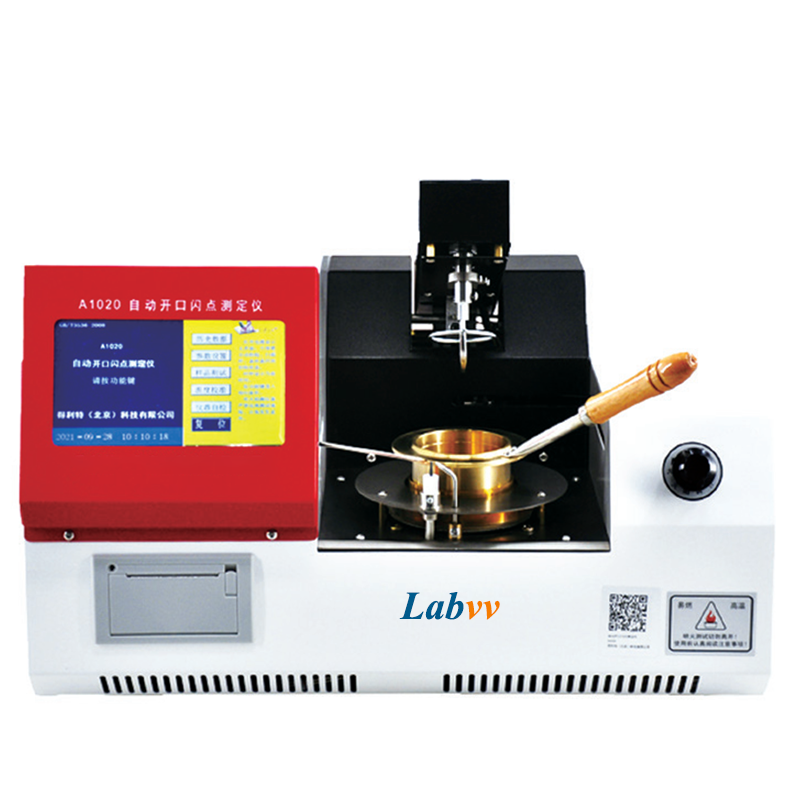
- A1020 Automatic Open Cup Flash Point Tester — ASTM D92 Cleveland method for high-flash petroleum products and bitumen.
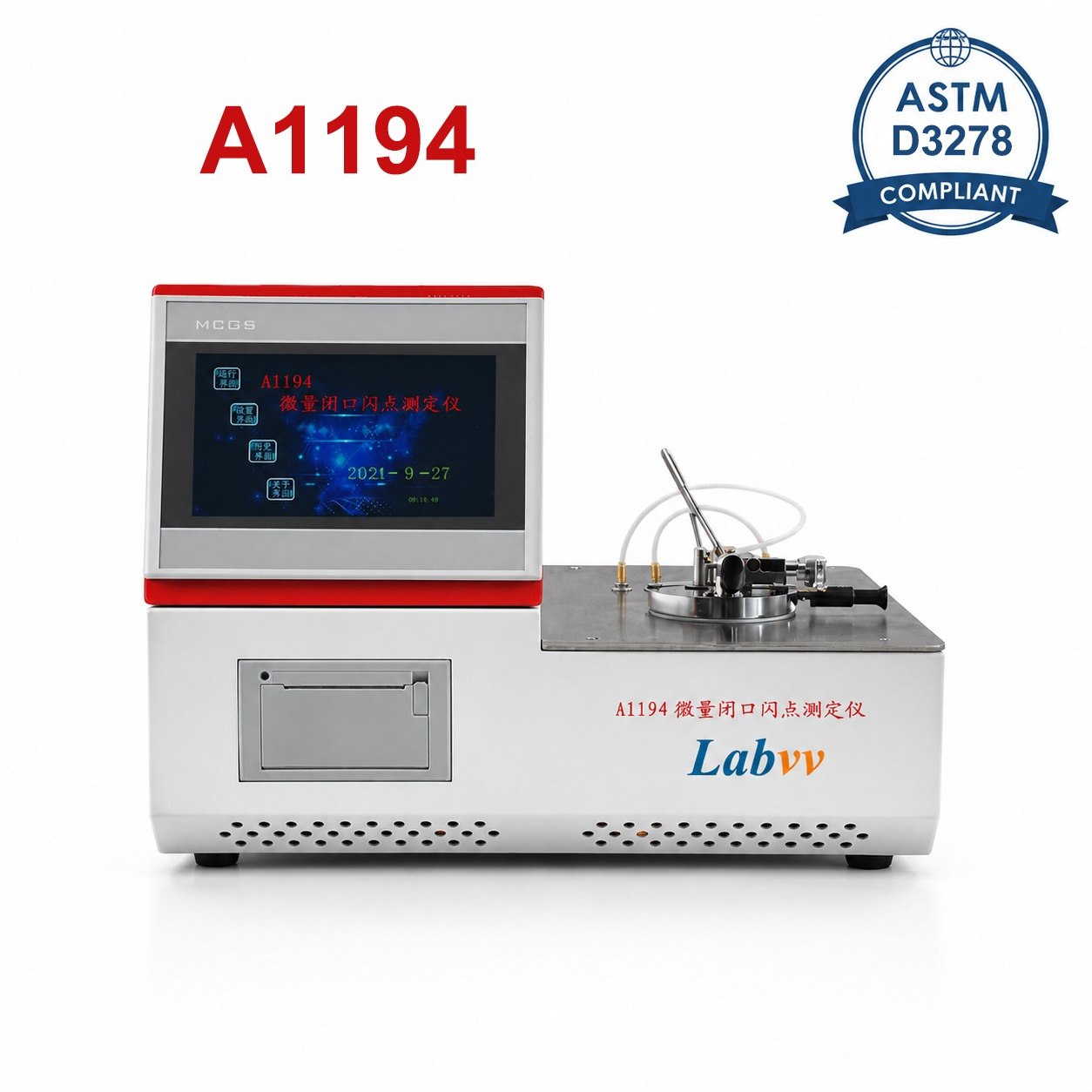
- A1194 Rapid Low-Temperature Closed Cup Flash Point Tester — ASTM D3278 small-scale rapid method for paints, coatings, adhesives, and solvents.
Every unit is factory-tested against the applicable standard before shipment, and we support our instruments with calibration guidance, spare parts, and responsive after-sales service. See the full range in our flash point tester collection, or compare models in our flash point tester buyer’s guide.
Red Flags to Avoid When Sourcing Flash Point Testers
Some warning signs should end a conversation with a potential flash point tester supplier immediately:
- Vague standard claims — “meets international standards” without naming ASTM D93, D92, or D3278.
- No verification data — the supplier cannot produce test reports, calibration certificates, or reference results.
- Unrealistic pricing — a price far below the market for the same claimed specification usually means non-compliant components or a resold instrument with no manufacturer support.
- No after-sales structure — no spare parts, no calibration service, no written warranty terms.
- Stock photos instead of real product images — a factory with a real instrument should have no problem showing it.
- Refusal to do a video call or live test — legitimate manufacturers are happy to demonstrate.
Remember that a flash point tester is a safety-critical instrument. The cheapest quote is only the best deal if the instrument passes verification, arrives on time, and keeps working for years.
Frequently Asked Questions
What is the difference between a flash point tester manufacturer and a supplier?
A manufacturer owns the factory and controls design, production, and quality. A supplier may be a manufacturer, a distributor, or a trading company that resells instruments. Buying directly from a manufacturer usually gives you better pricing, customization options, and quality control.
Which flash point standard do I need: ASTM D93 or ASTM D92?
ASTM D93 (Pensky-Martens, closed cup) is used for most fuels, lubricants, and liquids with flash points up to about 370 °C. ASTM D92 (Cleveland, open cup) is used for petroleum products with flash points above 79 °C, such as heavy oils and bitumen. Your product specification or regulation will normally state which method is required.
Can I order flash point testers with my own brand (OEM)?
Yes. Many flash point tester manufacturers, including LabVV, support OEM programs with custom branding, packaging, and accessories. ODM customization of specifications is also possible for volume orders. Discuss your requirements with the manufacturer before ordering.
What is a reasonable lead time for flash point testers?
Standard models from Chinese manufacturers typically ship in 2–6 weeks. Customized or OEM units can take 4–8 weeks depending on the complexity. Always confirm the lead time in writing and request production updates.
How do I verify that a flash point tester meets ASTM requirements?
Request the verification certificate, check the instrument’s heating rate, temperature sensor, and ignition mechanism against the standard, and if possible run a reference sample with a known flash point. Third-party calibration reports add extra confidence.
Get Your Flash Point Tester Quote
Ready to source flash point testers from a manufacturer that combines ASTM compliance with competitive factory pricing? Tell us your test method, sample types, and target quantity — we will recommend the right configuration and send you a detailed quotation.
Need a Reliable Flash Point Tester Manufacturer?
LabVV manufactures ASTM D93, D92, and D3278 flash point testers with full compliance support. Get a quote or talk to our team today.