
CO₂ Incubators in Cell Culture Laboratories
Applications, Requirements, and Selection Guide
In modern cell culture laboratories, maintaining a stable and contamination-free environment is essential for reliable experimental results. CO₂ incubators play a critical role by providing precise control of temperature, carbon dioxide concentration, humidity, and sterility—conditions required for the growth of mammalian cells, stem cells, and other sensitive cultures.
This page provides a comprehensive overview of how CO₂ incubators are used in cell culture laboratories, covering applications, operational requirements, contamination control, regulatory compliance, and selection guidance. Each section can be expanded into a dedicated article for deeper reading.
1. Role of CO₂ Incubators in Cell Culture Laboratories
CO₂ incubators are designed to simulate the physiological environment required for in vitro cell growth. By maintaining 37 °C temperature, 5% CO₂ concentration, and high relative humidity, they help stabilize the pH of culture media and support consistent cell metabolism.
In cell culture laboratories, CO₂ incubators are essential for:
- Mammalian cell culture
- Primary cell isolation and expansion
- Stem cell research
- Cell-based assays and functional studies
2. Application Scenarios in Cell Culture Research
CO₂ incubators are widely used across different cell culture laboratory types, each with specific performance expectations:
- Stem Cell Laboratories – requiring high environmental stability and low contamination risk
- Cancer Research Laboratories – supporting long-term culture of tumor cell lines
- Biopharmaceutical & Vaccine Laboratories – enabling upstream cell expansion
- IVF & Reproductive Medicine Labs – ensuring strict temperature and CO₂ accuracy
- University & Teaching Laboratories – balancing reliability and ease of operation
Each application places different demands on chamber uniformity, recovery time, and sterilization capability.
3. Environmental Control Requirements for Cell Culture
Reliable cell culture depends on precise environmental control inside the CO₂ incubator:
- CO₂ concentration stability to maintain culture media pH
- Temperature uniformity to avoid cell stress
- High humidity levels to reduce evaporation
- Fast recovery after door opening to minimize environmental fluctuations
Advanced CO₂ incubators use infrared CO₂ sensors and optimized airflow designs to ensure consistent conditions across the entire chamber.
4. Contamination Prevention and Sterilization
Contamination is one of the most critical risks in cell culture laboratories. CO₂ incubators incorporate multiple design features to reduce microbial growth:
- Smooth, easy-to-clean stainless-steel chambers
- Rounded corners to prevent residue buildup
- HEPA or microbial filtration of incoming air
Modern models also integrate in-chamber sterilization, such as high-temperature humid sterilization (up to 90 °C), which effectively eliminates bacteria, fungi, spores, and mycoplasma without chemical residues. This significantly reduces downtime and enhances laboratory biosafety.
5. GMP Compliance in Cell Culture Laboratories
For pharmaceutical, cell therapy, and biologics laboratories, CO₂ incubators must support GMP compliance:
- Reproducible environmental control
- Validatable performance (IQ/OQ/PQ)
- Alarm systems and data traceability
- Materials suitable for cleanroom environments
GMP-compliant CO₂ incubators help laboratories meet regulatory expectations while maintaining consistent cell culture quality.
6. Key Considerations When Selecting a CO₂ Incubator
When choosing a CO₂ incubator for a cell culture laboratory, several factors should be evaluated:
- Chamber volume and scalability
- CO₂ sensor technology (infrared vs thermal conductivity)
- Sterilization method and cycle time
- Environmental recovery speed
- Ease of cleaning and maintenance
Selecting the right configuration ensures long-term reliability and supports expanding laboratory workflows.
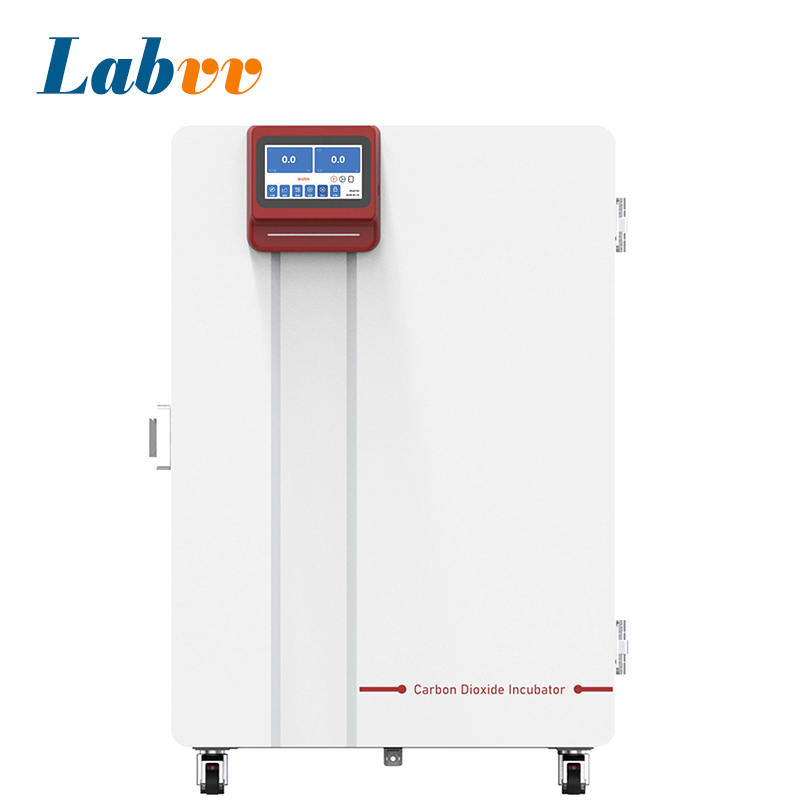
7. Integrating CO₂ Incubators into Cell Culture Laboratory Workflows
Beyond technical specifications, CO₂ incubators must fit seamlessly into daily laboratory operations. Proper placement, routine maintenance, and scheduled sterilization are essential to minimize contamination risk and maximize uptime.
Many laboratories adopt multiple CO₂ incubators to separate cell lines, reduce cross-contamination, and maintain continuous operation during sterilization cycles.
Explore CO₂ Incubator Solutions for Cell Culture Laboratories
LABVV offers a range of CO₂ incubators designed for cell culture laboratories, featuring precise environmental control and high-temperature humid sterilization.
👉 Learn more about our CO₂ Incubator Series (BX-100C / 180C / 260C)
Have questions or need expert guidance?
Reach out to our Labvv team !