
Air-Jacket vs Water-Jacket Incubator: Which Is Better for Your Laboratory?
When choosing a laboratory incubator for cell culture, microbiology, or pharmaceutical research, temperature control and stability are critical factors. One of the most common questions laboratories face is whether to choose an air-jacket incubator or a water-jacket incubator.
Both designs are widely used, but they differ significantly in heating method, temperature stability, maintenance, and cost. In this article, we compare air-jacket vs water-jacket incubators to help you determine which option is best for your laboratory needs.
1. What Is an Air-Jacket Incubator?
An air-jacket incubator uses heated air circulating around the inner chamber to maintain a stable temperature. Electric heating elements warm the air, and a fan distributes heat evenly throughout the chamber.
Key Characteristics
- Air acts as the heat transfer medium
- Fast temperature response
- Forced air circulation for uniform heating
2. What Is a Water-Jacket Incubator?
A water-jacket incubator features a chamber surrounded by a water-filled jacket. The water is heated and serves as a thermal buffer, helping maintain a highly stable internal temperature.
Key Characteristics
- Water used as the heat transfer medium
- High thermal mass
- Excellent temperature stability
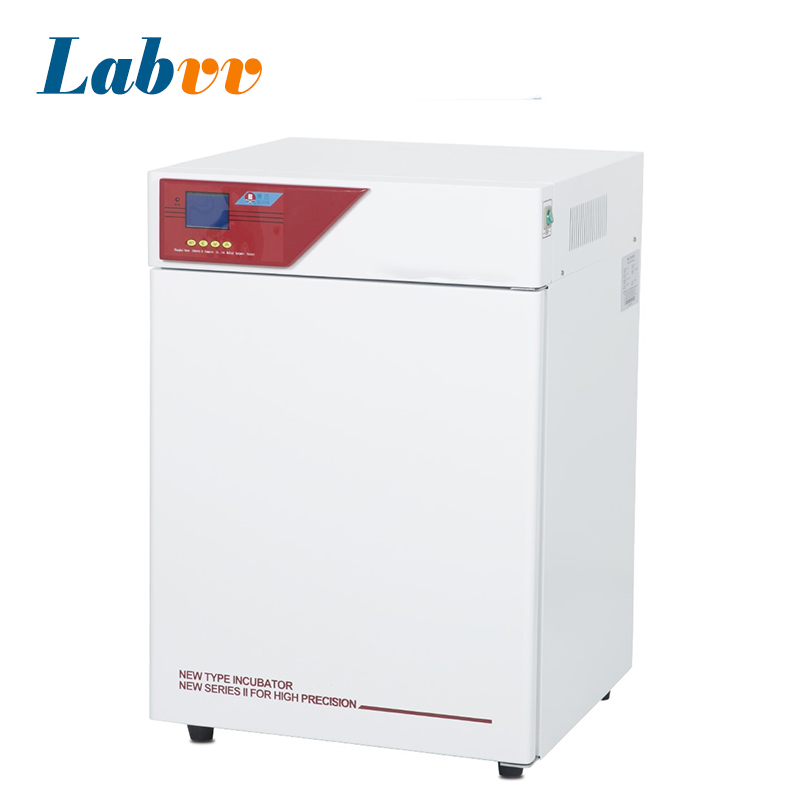
3. Air-Jacket vs Water-Jacket: Performance Comparison
| Feature | Air-Jacket Incubator | Water-Jacket Incubator |
|---|---|---|
| Temperature stability | Good | Excellent |
| Temperature uniformity | Very good | Very good |
| Recovery after door opening | Fast | Slower but steadier |
| Heating speed | Fast | Moderate |
| Energy consumption | Lower | Higher |
| Noise level | Fan noise present | Very quiet |
| Maintenance | Simple | More complex |
| Initial cost | Lower | Higher |
4. Advantages and Disadvantages
Air-Jacket Incubator – Pros & Cons
Advantages
- Rapid heating and recovery
- Lower purchase cost
- Lightweight and compact design
- Easy maintenance
Disadvantages
- Slight temperature fluctuations during frequent door openings
- Fan operation may generate noise
Water-Jacket Incubator – Pros & Cons
Advantages
- Superior temperature stability
- Minimal temperature fluctuation
- Ideal for long-term and sensitive experiments
Disadvantages
- Slower temperature response
- Higher energy consumption
- Requires water maintenance and monitoring
5. Which Incubator Should You Choose?
Choose an Air-Jacket Incubator if:
- You need a cost-effective solution
- Experiments require fast temperature recovery
- Applications involve routine cell or microbial culture
- Laboratory space and energy efficiency are priorities
Typical applications:
Basic cell culture, microbiology labs, teaching laboratories
Choose a Water-Jacket Incubator if:
- Temperature stability is critical
- Experiments are sensitive to environmental changes
- Long-term incubation is required
- Budget and maintenance capacity allow
Typical applications:
Pharmaceutical research, advanced cell culture, long-term biological studies
6. Expert Buying Tips from Labvv
Before making a final decision, consider the following factors:
- Temperature precision requirements
- Frequency of door opening
- Budget (initial and operating costs)
- Maintenance capability and service support
At labvv.com, we offer both air-jacket and water-jacket incubators, carefully selected to meet international laboratory standards and diverse application needs.
7. Conclusion
There is no single “better” option—only the right incubator for your application.
- Air-jacket incubators offer speed, efficiency, and affordability
- Water-jacket incubators deliver unmatched temperature stability for demanding experiments
By understanding the differences, laboratories can confidently select the incubator that best supports reliable and reproducible results.
👉 Explore high-quality laboratory incubators and get expert support at labvv.com.
Have questions or need expert guidance?
Reach out to our Labvv team !