
What Is a CO₂ Incubator Used For?
A CO₂ incubator is a specialized piece of laboratory equipment that creates and maintains a stable, controlled environment for the growth of living cells and biological samples. By precisely regulating temperature, carbon dioxide (CO₂) concentration, and humidity, it provides the optimal conditions needed for cell culture and other life science applications.
Because maintaining physiological conditions is essential for accurate and reproducible results, scientists widely use CO₂ incubators in biological research, pharmaceutical development, clinical laboratories, and biotechnology industries.
Why CO₂ Control Matters in Cell Culture
In many cell culture experiments, researchers grow cells in media that rely on a bicarbonate buffering system. This system requires a stable CO₂ concentration—typically around 5%—to maintain the proper pH level.
Without precise CO₂ regulation:
- The pH of the culture media can drift,
- Cell growth may slow or stop,
- Experimental results can become unreliable.
To address these challenges, a CO₂ incubator continuously monitors and adjusts CO₂ levels, ensuring a stable environment that closely mimics in vivo conditions.
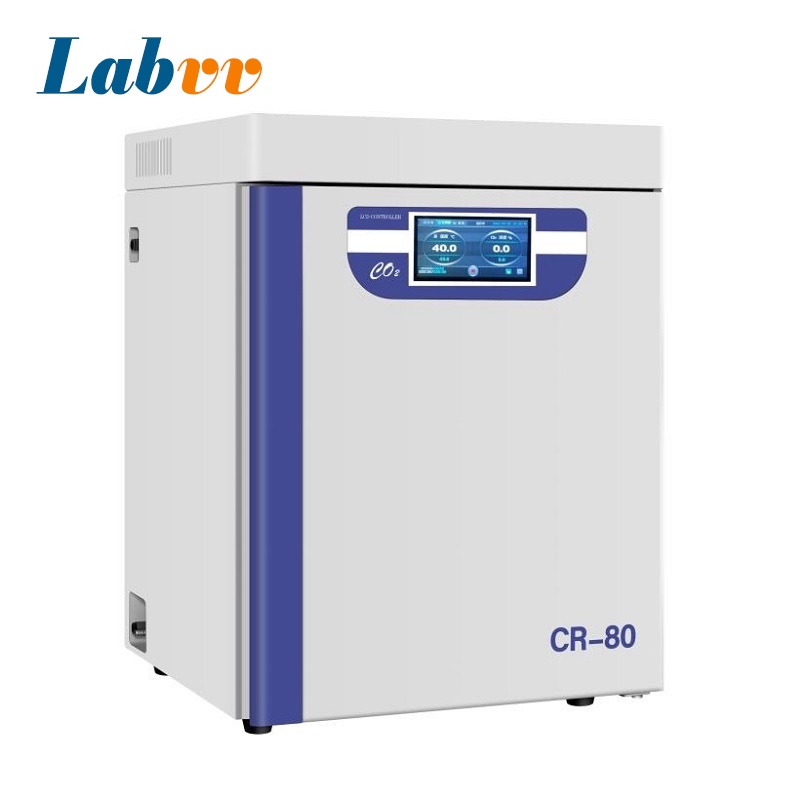
Main Uses of a CO₂ Incubator
1. Cell Culture and Tissue Engineering
The primary application of a CO₂ incubator is cell culture, which includes:
- Mammalian cell culture,
- Stem cell research,
- Primary cell cultivation,
- Tissue engineering studies.
By maintaining 37°C temperature, appropriate humidity, and controlled CO₂ levels, the incubator actively supports healthy cell growth and proliferation.
2. Pharmaceutical and Biotech Research
Pharmaceutical and biotechnology laboratories rely on CO₂ incubators for:
- Drug discovery and screening,
- Vaccine research and development,
- Biologics and antibody production,
- Cytotoxicity and cell-based assays.
Because environmental stability and contamination control are crucial in these fields, high-performance CO₂ incubators play an essential role in ensuring reliable outcomes.
3. Clinical and IVF Laboratories
CO₂ incubators are critical in clinical diagnostics and assisted reproductive technologies (ART), including:
- In vitro fertilization (IVF),
- Embryo culture,
- Clinical cell analysis.
In these applications, laboratories need high accuracy, rapid recovery after door opening, and sterile chamber design to protect sensitive samples.
4. Academic and Research Institutions
Universities and research institutes use CO₂ incubators for:
- Basic biological research,
- Microbiology and molecular biology experiments,
- Teaching and training laboratories.
Because these incubators are reliable and easy to operate, they suit both routine and advanced research environments.
Key Features That Support CO₂ Incubator Applications
To meet the diverse needs of laboratories, CO₂ incubators typically offer:
- Precise temperature control for uniform heat distribution,
- Accurate CO₂ sensors (IR sensors preferred for long-term stability),
- High humidity to reduce sample evaporation,
- Sterilization systems (dry heat or UV) to prevent contamination,
- Alarm and safety systems to alert users to deviations in temperature or gas levels.
These features ensure consistent experimental conditions and actively protect valuable biological samples.
CO₂ Incubator vs. Standard Laboratory Incubator
Unlike standard laboratory incubators, CO₂ incubators actively control gas levels and provide higher environmental precision. Standard incubators are suitable for microbiological or general incubation tasks, but CO₂ incubators specifically support living cell culture and sensitive biological research.
Choosing the Right CO₂ Incubator for Your Laboratory
When selecting a CO₂ incubator, laboratories should consider several factors:
- The type of application (cell culture, IVF, pharmaceutical research),
- Required chamber volume,
- Accuracy of CO₂ control and sensor type,
- Sterilization and contamination prevention features,
- Compliance with laboratory standards such as GMP or GLP.
By evaluating these criteria, labs can choose a model that meets their specific needs and ensures reliable results.
Conclusion
A CO₂ incubator is an essential tool that provides a controlled, physiologically relevant environment for cell culture, biomedical research, pharmaceutical development, and clinical applications. By maintaining stable temperature, CO₂ concentration, and humidity, it helps laboratories achieve reliable, reproducible, and high-quality results.
If your lab needs a reliable CO₂ incubator for cell culture or life science research, selecting a model with precise control, strong contamination protection, and proven performance is critical.
Have questions or need expert guidance?
Reach out to our Labvv team !