
Why Particle Counting Matters in Oil Analysis
🔬 In oil analysis, one of the most critical indicators of lubricant health is particle contamination. Solid particles — wear metals, dirt, dust, and debris — are the leading cause of premature equipment failure in engines, hydraulic systems, and industrial machinery.
An oil particle counter is the instrument that measures and classifies these particles by size and concentration. It is an essential component of any comprehensive oil analysis equipment setup for laboratories performing lubricant condition monitoring.
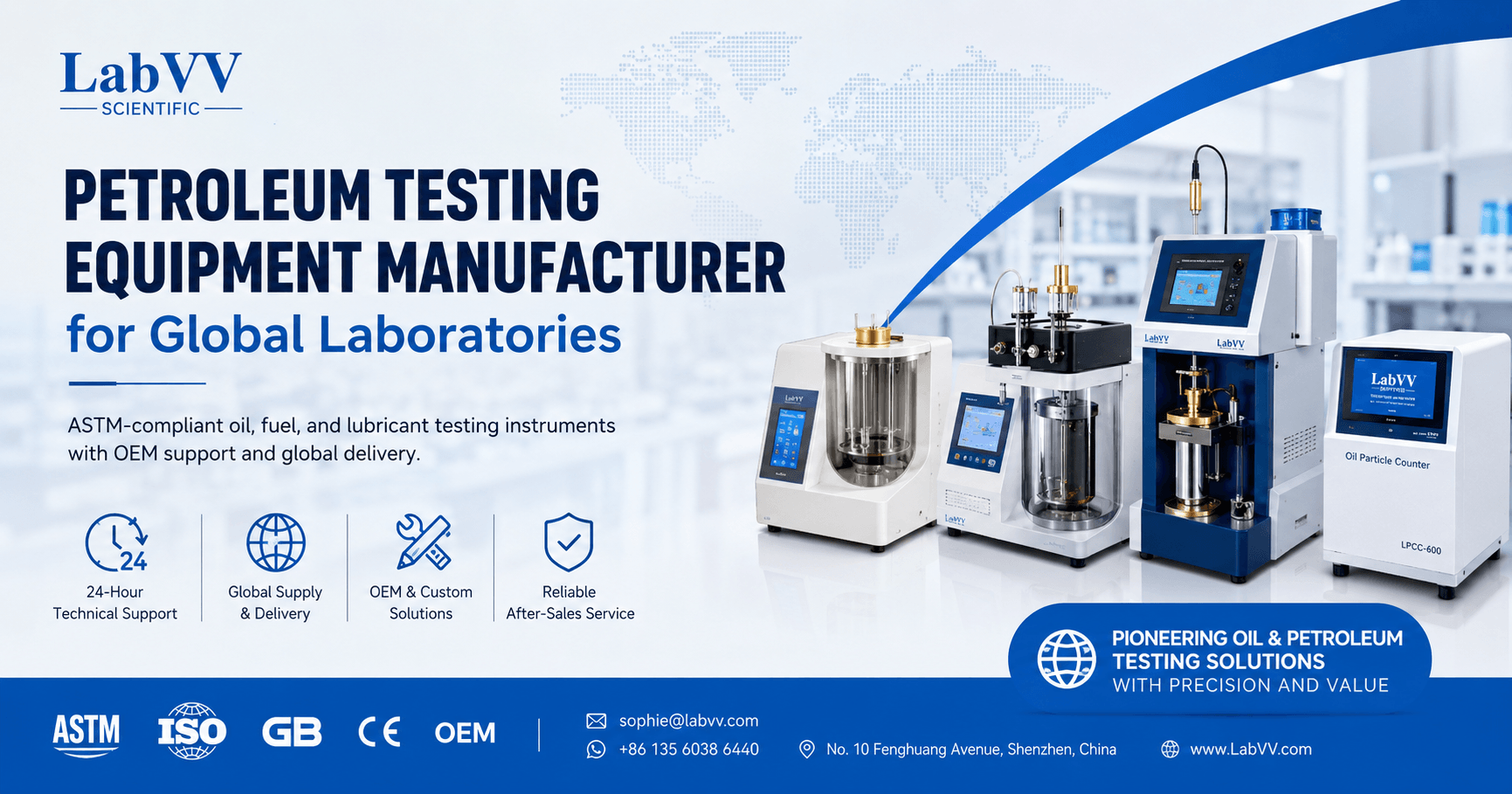
How an Oil Particle Counter Works
Most modern particle counters use the light obscuration principle (also known as light blockage). A precisely focused laser beam passes through a flow cell containing the oil sample. As particles suspended in the fluid pass through the beam, they cast shadows that are detected by a photodiode sensor.
The instrument then:
- ✅ Counts each individual particle
- ✅ Measures its size based on the shadow area
- ✅ Classifies particles into size channels (typically 4 μm, 6 μm, 10 μm, 14 μm, 21 μm, and 25 μm)
- ✅ Reports results according to international cleanliness standards
Key Specifications to Evaluate
When selecting an oil particle counter for your laboratory, consider these critical specifications:
| Specification | What It Affects | Recommended Range |
|---|---|---|
| Particle size range | Types of contamination detectable | 2 μm to 100 μm |
| Size channels | Reporting granularity | ≥ 6 channels |
| Flow rate | Sample throughput speed | 10-60 mL/min |
| Viscosity handling | Maximum oil viscosity | ≥ 400 cSt at 40°C (with dilution) |
| Reporting standards | Compatibility with your QC system | ISO 4406, NAS 1638, SAE AS4059 |
| Calibration standard | Measurement accuracy traceability | ISO 11171 or ISO 21501 |
Three Types of Oil Particle Counters
1. Laboratory Particle Counters
🏛️ Benchtop instruments designed for use in controlled laboratory environments. They offer the highest accuracy, multiple reporting standards, and comprehensive data management software. Ideal for central testing laboratories, oil analysis service providers, and quality control departments.
2. Portable Particle Counters
🎒 Handheld or suitcase-style units for on-site field testing. They allow technicians to check oil cleanliness directly at the equipment location — eliminating the need to transport samples back to the lab. Essential for field service and maintenance teams.
3. Online / Inline Particle Counters
⚙️ Installed directly in hydraulic or lubrication systems for continuous, real-time monitoring. These sensors provide early warning when contamination levels spike, enabling proactive maintenance before damage occurs.
ISO 4406 Cleanliness Code Explained
The ISO 4406:1999 standard is the most widely used cleanliness classification system for hydraulic fluids and lubricants. It expresses contamination level as three numbers, representing particle counts at three size thresholds:
Example — Code 18/16/13:
- 🔹 18 → 1,300 to 2,500 particles/mL > 4 μm
- 🔹 16 → 320 to 640 particles/mL > 6 μm
- 🔹 13 → 40 to 80 particles/mL > 14 μm
Target cleanliness levels by application:
| Application | Target ISO Code | Typical Filter Rating |
|---|---|---|
| High-pressure hydraulic systems (>200 bar) | 15/13/11 or cleaner | 3-5 μm |
| Industrial gearboxes | 17/15/12 | 10 μm |
| Wind turbine gearboxes | 15/13/10 | 3-5 μm |
| Engine oil (diesel/gasoline) | 18/16/13 | 10-15 μm |
| Transformer oil | 14/12/10 | 1-3 μm |
Oil Particle Counter Price Range (2026)
💵 Pricing varies significantly by type, accuracy, and brand. Below is a general reference:
| Type | Price Range (USD) | Best For |
|---|---|---|
| Portable Particle Counter | $3,000 – $8,000 | Field service, on-site checks |
| Laboratory Particle Counter | $8,000 – $20,000 | Central labs, QC departments |
| Online / Inline Sensor | $2,000 – $6,000 | Continuous monitoring systems |
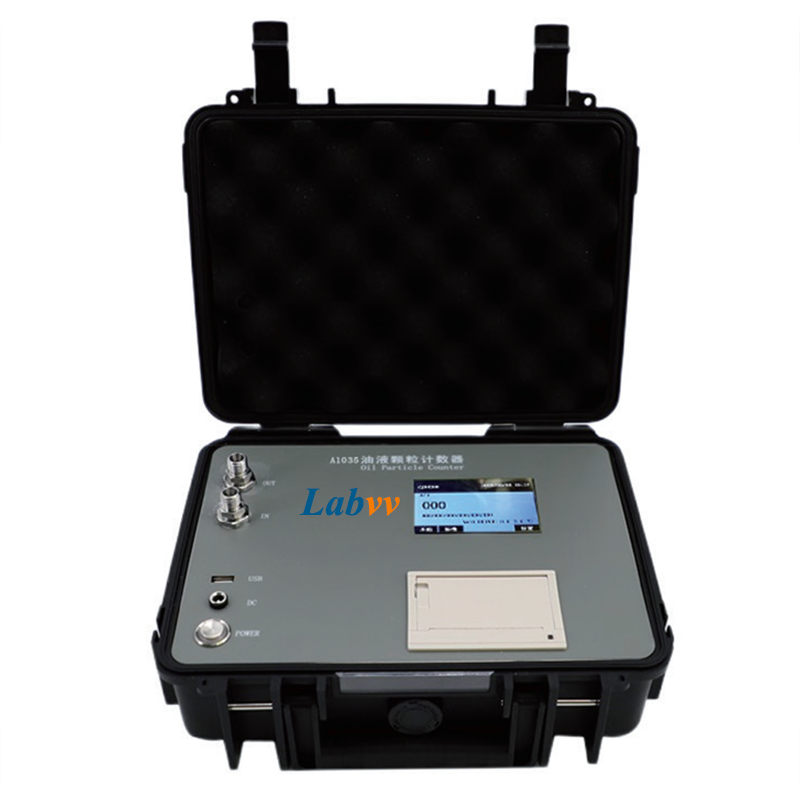
LabVV Oil Particle Counter Solutions
🔧 LabVV offers reliable, cost-effective oil particle counters designed for demanding industrial applications:
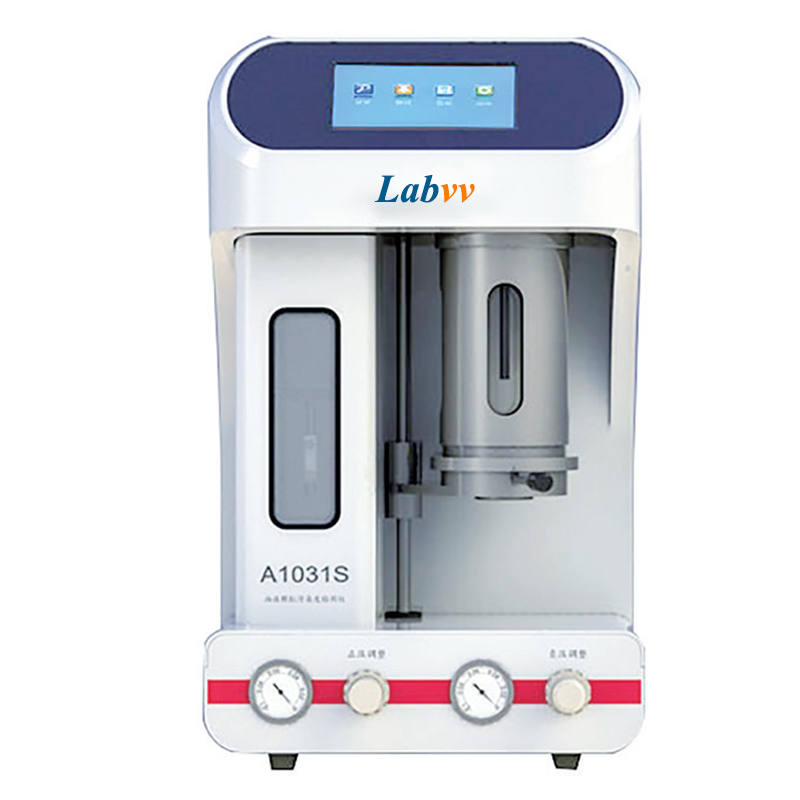
- A1031S Oil Particle Counter — A portable, high-accuracy particle counter ideal for on-site lubricant cleanliness testing. Supports ISO 4406 and NAS 1638 reporting.
- A1035 Oil Particle Counter (ISO 4406) — Laboratory-grade benchtop particle counter with 6 size channels, built-in thermal printer, and data management software.
Related Oil Analysis Equipment
📋 A particle counter is just one component of a complete oil analysis laboratory. Other essential instruments include viscometers, flash point testers, spectrometers, and TAN/TBN analyzers. Browse our complete Oil Analysis Equipment Guide for a full overview of laboratory solutions.
💬 Need help selecting the right oil particle counter for your laboratory?
Our team can recommend the best solution based on your application, testing volume, and budget.