
What Is a Laboratory Incubator?
A laboratory incubator is a crucial piece of equipment used in scientific research and various industries such as pharmaceuticals, biotechnology, and healthcare. It provides a controlled environment that maintains optimal conditions—like temperature, humidity, and gas concentration—for the growth and development of cells, cultures, and microbial organisms. These conditions are essential for experiments that require precise environmental control.
The Role of a Laboratory Incubator
Laboratory incubators are primarily used to:
- Cultivate Microorganisms: Incubators provide the right temperature and conditions for growing bacteria, fungi, and other microorganisms. These are essential for medical, environmental, and food safety testing.
- Cell Culture: In biological and medical labs, incubators support the growth of human, animal, or plant cells for research in areas like cancer research, drug development, and genetic studies.
- Maintain Sterility: Incubators are designed to maintain a sterile environment, minimizing the risk of contamination during delicate experiments and sample growth.
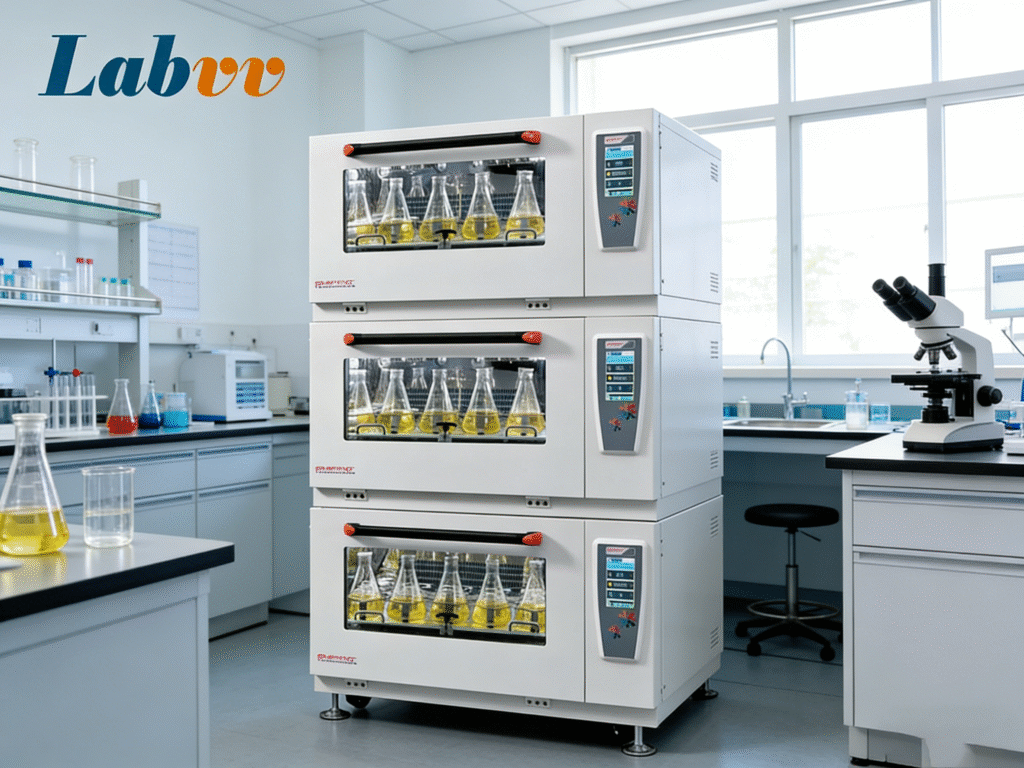
A laboratory incubator provides a stable temperature and controlled environment for cell culture and microbiological research.
Types of Laboratory Incubators
There are different types of laboratory incubators, each designed to meet specific needs. The most common types include:
- CO₂ Incubators: These incubators are specifically designed for cell culture. They maintain a constant temperature and a controlled level of CO₂ (usually around 5%) to help stabilize the pH of culture media. CO₂ incubators are ideal for maintaining the delicate balance needed for cell proliferation and differentiation.
- Shaking Incubators: These incubators are used for experiments where samples need to be agitated or shaken. Commonly used in microbiology and biochemistry, they ensure that cultures are aerated and evenly mixed during incubation.
- Forced Air Incubators: These incubators provide a uniform temperature throughout the chamber using forced air circulation. They are often used for general-purpose applications like culturing bacteria or growing plants in a controlled environment.
- Air-Jacketed Incubators: These are high-performance incubators that maintain temperature consistency using an air jacket, ideal for sensitive cell cultures and applications where temperature fluctuations can affect the outcomes of the experiment.
Key Features to Look for in a Laboratory Incubator
When selecting a laboratory incubator for your needs, several factors come into play. These include:
- Temperature Control: Most incubators offer temperature control within a range of 5°C above ambient temperature to 60°C. For applications like cell culture, precise temperature control is essential.
- Humidity Control: Many incubators also have humidity control systems to prevent evaporation of culture media or maintain optimum moisture levels for certain organisms.
- CO₂ and O₂ Control: For cell cultures, accurate CO₂ and O₂ levels are vital. Incubators designed for this purpose typically come with sensors to monitor and regulate these gas concentrations.
- Interior Design: The interior of the incubator should be easy to clean, with shelves that can be adjusted for different sizes of culture flasks, Petri dishes, or other containers.
- Safety Features: Features like alarms for temperature, CO₂, or O₂ deviations, as well as door seals to minimize contamination, are crucial for ensuring experiment accuracy and preventing damage to cultures.
Applications of Laboratory Incubators
Laboratory incubators are used in various fields, including:
- Healthcare and Medical Laboratories: Incubators are essential for growing pathogens for research, vaccine development, and diagnostic tests.
- Biotechnology and Pharmaceutical Industries: Incubators help in drug development, enzyme production, and other biotechnological applications.
- Environmental Science: Researchers use incubators to culture environmental samples and study microbial life in different environments.
- Educational and Research Institutions: Incubators play a key role in biological research, such as studying cell biology, genetics, and biochemistry.
Why Choose Labvv for Your Laboratory Incubator Needs?
At labvv, we provide high-quality laboratory incubators designed to meet the specific needs of various industries. Whether you’re working with delicate cell cultures, microbiological organisms, or environmental samples, we offer incubators that ensure optimal conditions for your experiments.
Our incubators come equipped with advanced features, including precise temperature and humidity controls, built-in safety mechanisms, and easy-to-clean interiors, making them reliable tools for your research.
Explore our selection of laboratory incubators today, and elevate your research with reliable, high-performance equipment. For more information or to place an order, contact labvv.
Have questions or need expert guidance?
Reach out to our Labvv team !