
Complete Guide to Chemical Laboratories: Functions, Equipment, and Applications
Chemical laboratories are specialized facilities designed for research, analysis, testing, and sample preparation. They provide a controlled and safe environment where scientists, technicians, and students can perform experiments, study chemical reactions, and achieve accurate, reproducible results.
These laboratories are commonly found in universities, research institutes, industrial facilities, pharmaceutical companies, and environmental testing centers. They serve as the foundation for scientific innovation, quality assurance, and process development across multiple industries.
Key Functions of Chemical Laboratories
Chemical laboratories perform a range of critical tasks, including:
- Research and Development: Conduct experiments to explore new chemical reactions, compounds, and materials.
- Analytical Testing: Examine chemical samples to determine composition, purity, and quality.
- Quality Control: Ensure raw materials, intermediates, and finished products meet required standards.
- Education and Training: Provide practical experience in laboratory techniques, chemical handling, and measurement procedures.
These functions ensure that chemical laboratories support both innovation and compliance with industry standards.
Commonly Used Equipment
Chemical laboratories rely on various instruments to carry out daily operations. The most commonly used equipment includes:
- Water Purification Systems
- Essential for preparing reagents, feeding analytical instruments, and cleaning glassware.
- Types include deionized (DI), reverse osmosis (RO), and ultrapure water systems.
- Drying Ovens and Thermal Equipment
- Used for glassware drying, sample preparation, and controlled heating of materials.
- Typical options: ventilated ovens, hot-air ovens, and vacuum drying ovens.
- Supporting Instruments
- Enhance efficiency, safety, and reproducibility.
- Common devices include:
- Laboratory refrigerators and freezers for storing samples and reagents
- Water baths and heating plates for temperature-controlled experiments
- Centrifuges for separating samples
- Magnetic stirrers and laboratory shakers for mixing solutions
- Fume hoods for safely handling volatile or hazardous chemicals
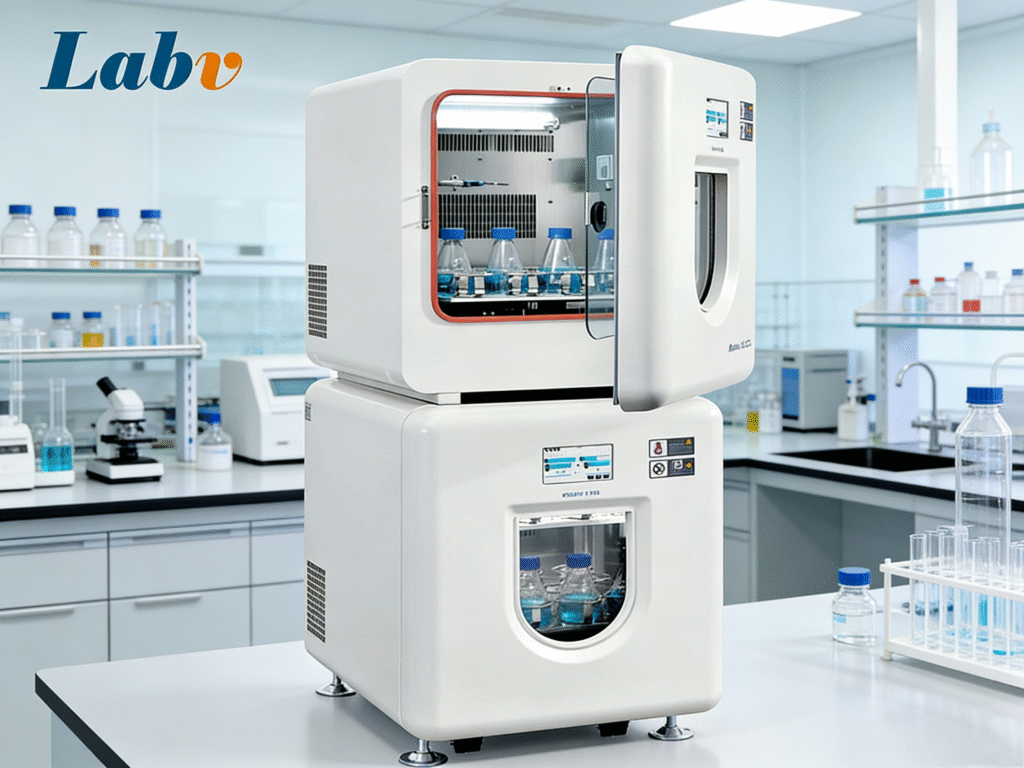
- Temperature-Controlled Incubators
- Frequently used in research and specialized experiments.
- Maintain precise temperature conditions for reactions, sample incubation, and material stability testing.
For a detailed guide on setting up chemical laboratories and selecting appropriate equipment, visit our dedicated page.
Safety and Best Practices
Maintaining safety and reliability is a top priority in chemical laboratories:
- Proper ventilation and fume extraction
- Safe storage of chemicals and hazardous materials
- Use of personal protective equipment (PPE)
- Regular maintenance and calibration of instruments
Following these measures ensures a consistent, safe, and productive laboratory environment for all personnel.
Applications of Chemical Laboratories
Chemical laboratories are vital in numerous sectors:
- Academic and Teaching Labs: Provide hands-on chemistry education and training
- Pharmaceutical and Biotechnology Research: Develop, analyze, and test new compounds
- Industrial Chemical Labs: Perform quality control, process optimization, and material testing
- Environmental and Analytical Testing Labs: Analyze air, water, and soil samples for compliance and safety
By supporting these applications, chemical laboratories enable scientific progress, quality assurance, and innovation.
Have questions or need expert guidance?
Reach out to our Labvv team !