
What Is a CO₂ Incubator?
Introduction
A CO₂ incubator is an essential piece of laboratory equipment used primarily for cell culture, especially for mammalian and human cells. By precisely controlling temperature, carbon dioxide (CO₂) concentration, and humidity, a CO₂ incubator creates an environment that closely mimics physiological conditions inside the human body.
This article explains what a CO₂ incubator is, how it works, and why it is critical for modern cell culture laboratories.
What Is a CO₂ Incubator?
A CO₂ incubator is a specialized laboratory incubator designed to maintain optimal growth conditions for cultured cells. Unlike standard laboratory incubators, it provides not only accurate temperature control but also regulated CO₂ levels and high humidity, which are essential for maintaining stable pH levels in cell culture media.
Most CO₂ incubators operate at:
- Temperature: 37°C
- CO₂ concentration: 5%
- Relative humidity: ≥90%
These conditions support healthy cell growth and consistent experimental results.
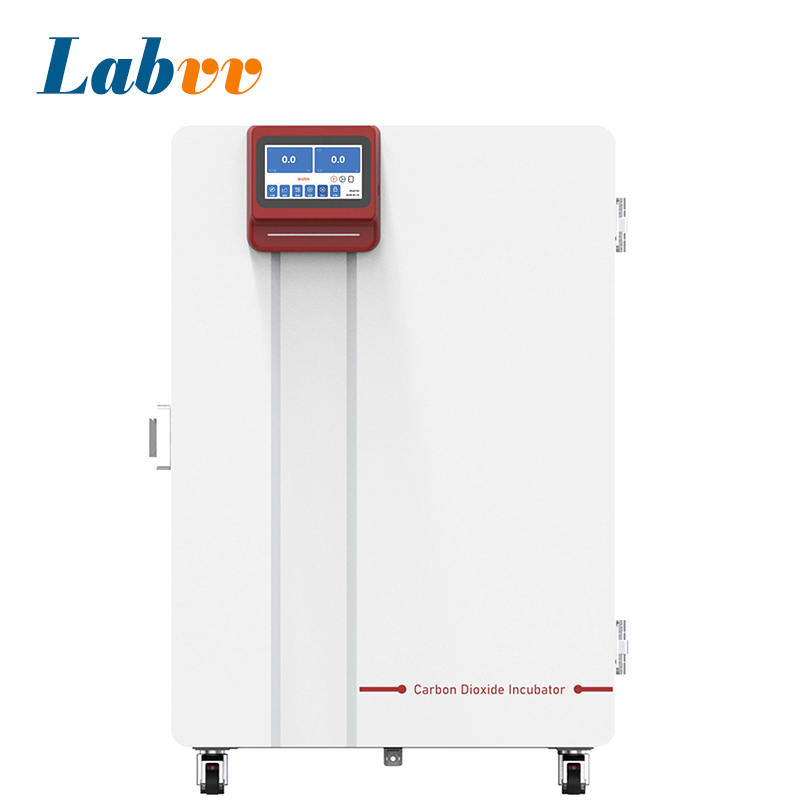
How Does a CO₂ Incubator Work?
A CO₂ incubator works by continuously monitoring and adjusting internal environmental parameters:
- CO₂ control system
An infrared (IR) or thermal conductivity (TC) sensor measures CO₂ concentration and injects CO₂ gas as needed to maintain the set level. - Temperature control
Uniform heating systems ensure stable temperature throughout the chamber. - Humidity control
A water pan or active humidification system maintains high humidity to prevent evaporation of culture media.
Together, these systems create a stable and contamination-controlled environment for sensitive cell cultures.
Why Is CO₂ Control Important for Cell Culture?
In most mammalian cell culture systems, the culture medium uses a bicarbonate buffer, which requires a specific CO₂ concentration to maintain physiological pH (typically pH 7.2–7.4). Without CO₂ regulation, pH levels can drift, leading to:
- Reduced cell viability
- Altered cell morphology
- Unreliable experimental outcomes
This is why a CO₂ incubator for cell culture is indispensable in biomedical and pharmaceutical laboratories.
Applications of a CO₂ Incubator
CO₂ incubators are widely used in:
- Mammalian and human cell culture
- Stem cell research
- Cancer research
- Vaccine development
- IVF and reproductive medicine
- Biotechnology and pharmaceutical R&D
CO₂ Incubator vs Standard Laboratory Incubator
While both incubators provide temperature control, only a CO₂ incubator can regulate CO₂ concentration and humidity. Standard laboratory incubators are suitable for bacteria or general incubation but cannot support mammalian cell culture due to the lack of atmospheric control.
Conclusion
So, what is a CO₂ incubator?
It is a critical laboratory device designed to provide a controlled environment for sensitive cell cultures by regulating temperature, CO₂ concentration, and humidity. For any laboratory involved in mammalian cell research, investing in a reliable CO₂ incubator is essential for accuracy, reproducibility, and cell viability.
Have questions or need expert guidance?
Reach out to our Labvv team !